

Understanding the Anatomy of a Jet Ski Powertrain
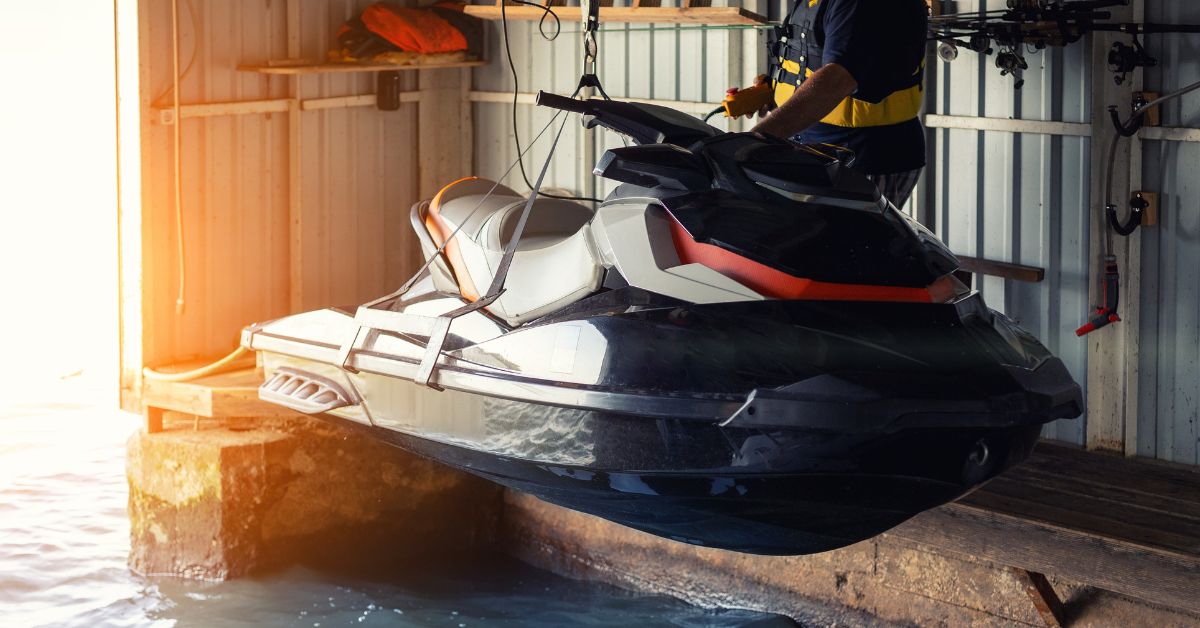
As a jet ski enthusiast and owner, you should have an in-depth understanding of your machine, particularly its powertrain. This knowledge is essential for regular maintenance, troubleshooting, and ensuring that you’re safe when navigating on the water. Here at SBT, we want to help you understand the anatomy of your jet ski’s powertrain so you can better appreciate the complexity of your watercraft. A good understanding will help you see how all the parts function together, helping you potentially even diagnose and handle certain minor repairs or replacements yourself.
The Engine
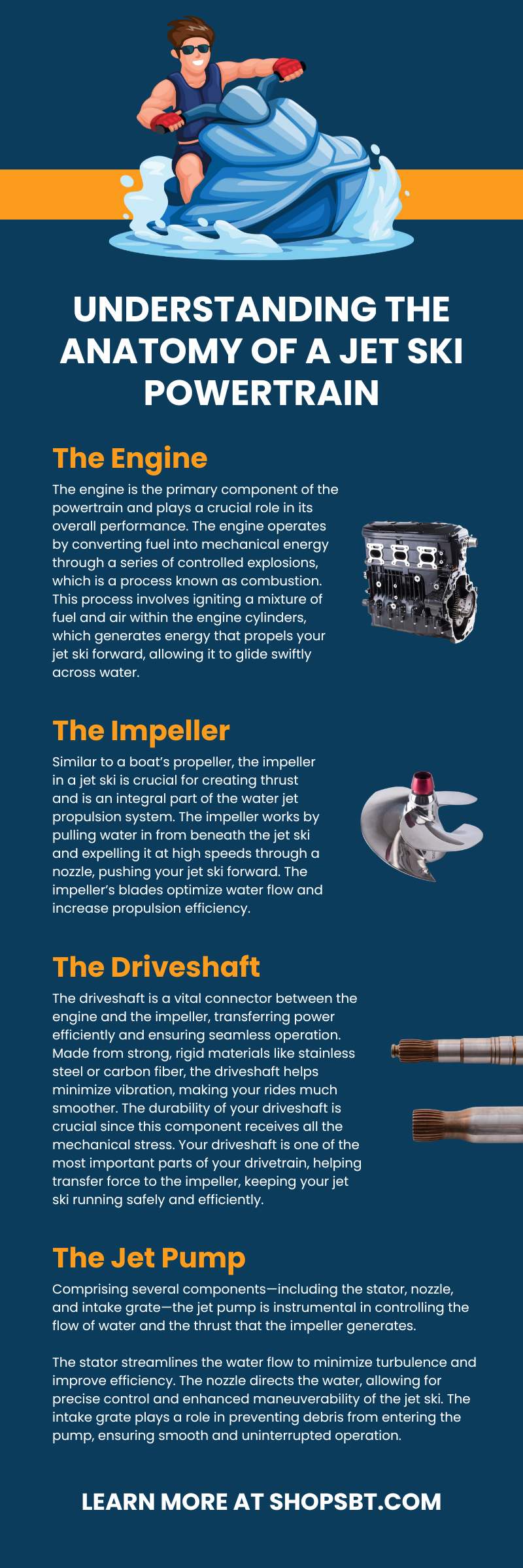
The engine is the primary component of the powertrain and plays a crucial role in its overall performance. The engine operates by converting fuel into mechanical energy through a series of controlled explosions, which is a process known as combustion. This process involves igniting a mixture of fuel and air within the engine cylinders, which generates energy that propels your jet ski forward, allowing it to glide swiftly across water.
High-performance engines maximize efficiency, offering the perfect balance of speed, power, and fuel consumption. Using advanced tech, like electronic fuel injection and turbocharging, a high-quality engine can give you the top performance you’re looking for in your jet ski.
The Impeller
Similar to a boat’s propeller, the impeller in a jet ski is crucial for creating thrust and is an integral part of the water jet propulsion system. The impeller works by pulling water in from beneath the jet ski and expelling it at high speeds through a nozzle, pushing your jet ski forward. The impeller’s blades optimize water flow and increase propulsion efficiency.
The design, material, and efficiency of the impeller play a significant role in determining the speed, acceleration, and overall performance of the jet ski. Advanced impellers use durable, corrosion-resistant materials (such as stainless steel or high-strength composites) to withstand high pressure and keep your jet ski thriving on the water for longer.
The Driveshaft
The driveshaft is a vital connector between the engine and the impeller, transferring power efficiently and ensuring seamless operation. Made from strong, rigid materials like stainless steel or carbon fiber, the driveshaft helps minimize vibration, making your rides much smoother. The durability of your driveshaft is crucial since this component receives all the mechanical stress. Your driveshaft is one of the most important parts of your drivetrain, helping transfer force to the impeller, keeping your jet ski running safely and efficiently.
The Jet Pump
Comprising several components—including the stator, nozzle, and intake grate—the jet pump is instrumental in controlling the flow of water and the thrust that the impeller generates.
The stator streamlines the water flow to minimize turbulence and improve efficiency. The nozzle directs the water, allowing for precise control and enhanced maneuverability of the jet ski. The intake grate plays a role in preventing debris from entering the pump, ensuring smooth and uninterrupted operation.
The Exhaust System
Responsible for expelling gases produced during the engine’s combustion process, the exhaust system allows for a cleaner and more efficient combustion cycle. A well-designed exhaust system reduces engine back pressure, enhancing performance and extending the engine’s lifespan by preventing overheating. It often includes mufflers and resonators to minimize noise, making your time on the water much quieter and more enjoyable for you and everyone around you. Additionally, modern exhaust systems often have catalytic converters to reduce harmful emissions, making them more environmentally friendly.
The Cooling System
Essential for preventing engine overheating, the cooling system circulates water through the engine’s components, maintaining a stable and optimal operating temperature. The cooling system often uses a combination of raw water from the environment and closed-loop coolants.
The system might include thermostats and heat exchangers to regulate temperature effectively. To keep your cooling system running properly, it’s important to regularly flush it and give it the proper maintenance. This will help prevent blockages and corrosion.
Fuel Injectors
Fuel injectors deliver the precise amount of fuel to the engine, ensuring the fuel-air mixture is ideal for performance and efficiency. Injectors adapt to different operating conditions, such as temperature, altitude, and load, to maintain consistent power output and fuel economy. High-quality injectors guarantee smooth operation and quick throttle response.
Advanced fuel injection systems can also include sensors and electronic control units (ECUs) to optimize fuel delivery and monitor engine performance in real time. Be sure to practice regular cleaning and maintenance to prevent clogging, helping your fuel injectors function optimally.
Spark Plugs
Small yet incredibly powerful, spark plugs are the unsung heroes of engine ignition, generating the crucial electric spark necessary to ignite the fuel-air mixture within the engine’s cylinders. This ignition is critical for powering each cycle of the engine, allowing the jet ski to maintain the momentum and speed that you’re looking for on the water.
The Battery
The battery provides electricity to power the starter motor, which is crucial for initiating the engine’s operation. In addition to starting the engine, the battery also powers other electronic components, such as navigation systems, lights, and onboard sound systems. A reliable battery is key to a seamless start and the overall quality of the electric system.
The Throttle
By adjusting the throttle, you can regulate the amount of fuel and air entering the engine. Therefore, this control mechanism is directly linked to the jet ski’s speed and responsiveness. An efficient throttle system delivers smooth power and the precise acceleration control that you want from your personal watercraft. Maintain your throttle to avoid sticky or unresponsive controls.
The Steering System
The steering system provides control over the direction of the jet ski’s nozzle. It comprises handlebars or handgrips connected to cables or hydraulic systems. This system offers precise maneuverability and control on the water, allowing you to navigate through various water conditions with ease, from calm lakes to choppy seas. High-quality steering components ensure reliable and responsive handling. Regular inspections can prevent issues like loose cables that compromise maneuverability.
Oil and Lubricants
The final parts of your powertrain that we will discuss are the oil and lubricants, indispensable for reducing friction and minimizing wear and tear. These fluids guarantee smooth operation, extend the lifespan of components, and help prevent mechanical failures by keeping everything running efficiently. Be sure to periodically check oil and lubrication levels.
With a strong understanding of the anatomy of your jet ski’s powertrain, you can better appreciate its intricate workings and make sure everything operates how it’s supposed to. Always adhere to manufacturer guidelines and routinely inspect your powertrain for issues. At SBT, we want to help. When you need parts or someone to service components like your PWC drive shaft, you’ll want SBT on your side.
No Comments Yet